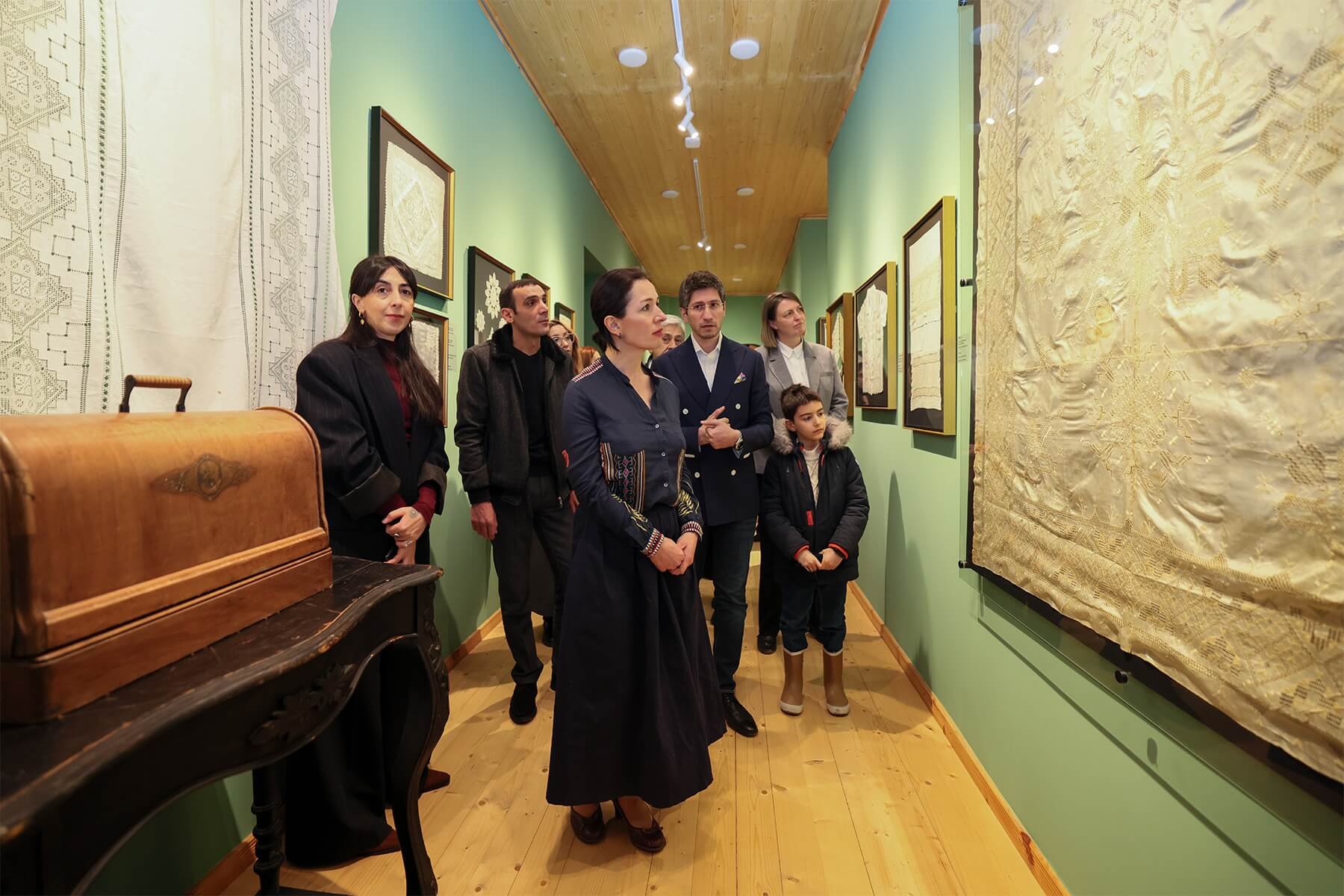
The Dilijan branch of the Hovhannes Sharambeyan Folk Arts Museum is reopening with a new concept as the Armenian Textile Museum, presenting the centuries-old traditions of Armenian artistic textiles and their continuous development.
Following the completion of restoration works, the museum was officially reopened, marking the launch of Armenia’s first specialized textile museum.
The opening ceremony was attended by Minister of Education, Science, Culture and Sport Zhanna Andreasyan, Deputy Minister Alfred Kocharyan, Mayor of Dilijan Davit Sargsyan, Director of the Hovhannes Sharambeyan Folk Arts Museum Lusine Toroyan, members of the Sharambeyan family, including his grandson Narek Van Ashughatoyan.
The building was restored with funding from the Ministry of Education, Science, Culture and Sport of the Republic of Armenia. Prior to renovation, the museum building, listed in the State Register of Immovable Monuments of History and Culture, was in a deteriorated condition.
Congratulating the museum on its reopening, Minister Zhanna Andreasyan noted that the efforts invested had produced the desired result.
“This wonderful museum environment is the most worthy tribute to the centenary of Hovhannes Sharambeyan. It is also our expression of gratitude to his memory and our commitment to continue the important work he began.
The museum building is a monument of history and culture, and the restoration works were carried out with the utmost care and sensitivity, respecting all the requirements for preserving a historic structure.”
The minister also thanked all the professionals involved in the restoration process – from construction specialists to the curators of the new exhibition.
“Making the history of Armenian textile visible is of particular importance, and we intend to continue this work. It offers an excellent opportunity for our children, tourists and visitors to engage with this remarkable form of art,” she added.
The permanent exhibition of the Armenian Textile Museum is curated by Narek Van Ashughatoyan, grandson of Hovhannes Sharambeyan, and painter-ethnographer Hrazdan Tokmajyan. Narek Van Ashughatoyan presented the history of the museum’s creation and the details of the exhibition.
“Considering that the majority of the Folk Art Museum’s collection consists of textile works, we wanted to propose a unique and innovative idea for Armenia – to establish a museum dedicated to textiles. My grandfather was the last resident of this house, and for me this place is not just a museum but a family home where the light has once again been lit,” he noted.
The Museum presents carpets and flat-woven rugs, embroidery and lace, representing various schools, techniques, stages of development and applications.
In addition to objects from the Folk Arts Museum collection, the renewed museum also displays items from the History Museum of Armenia and the Service for the Protection of Historical-Cultural Reserves and the Historical Environment.
A special place in the new exhibition is devoted to Hovhannes Sharambeyan’s Dilijan-themed paintings, which function as artistic documents preserving the historical atmosphere and character of the town.
The Armenian Textile Museum aims to become not only an exhibition space but also a vibrant cultural environment. The museum will host masterclasses, outdoor events, exhibition-sales featuring folk masters, as well as traditional festivals, rituals, and performances of national music and dance dedicated to the promotion of intangible cultural heritage.
An important component will also be education: the museum will serve as a resource for schoolchildren, students and the wider public, contributing to a deeper appreciation of cultural heritage.
The new specialized exhibition is also expected to enhance the tourist attractiveness of Dilijan.
The Armenian Textile Museum aims to become one of the city’s active cultural centers, bringing together history, art, education and contemporary cultural processes.
The Dilijan Folk Art Museum was established in 1979 at the initiative of Hovhannes Sharambeyan, an Honored Artist and a prominent expert in Armenian folk culture. The building was constructed by Samson Bek-Harutyunyan and originally served as the summer residence of Princess Mariam Tumanyan, who lived in Tiflis and spent the summer months there. The last resident of the house was Hovhannes Sharambeyan himself, who later transformed the building into the Folk Art Museum.