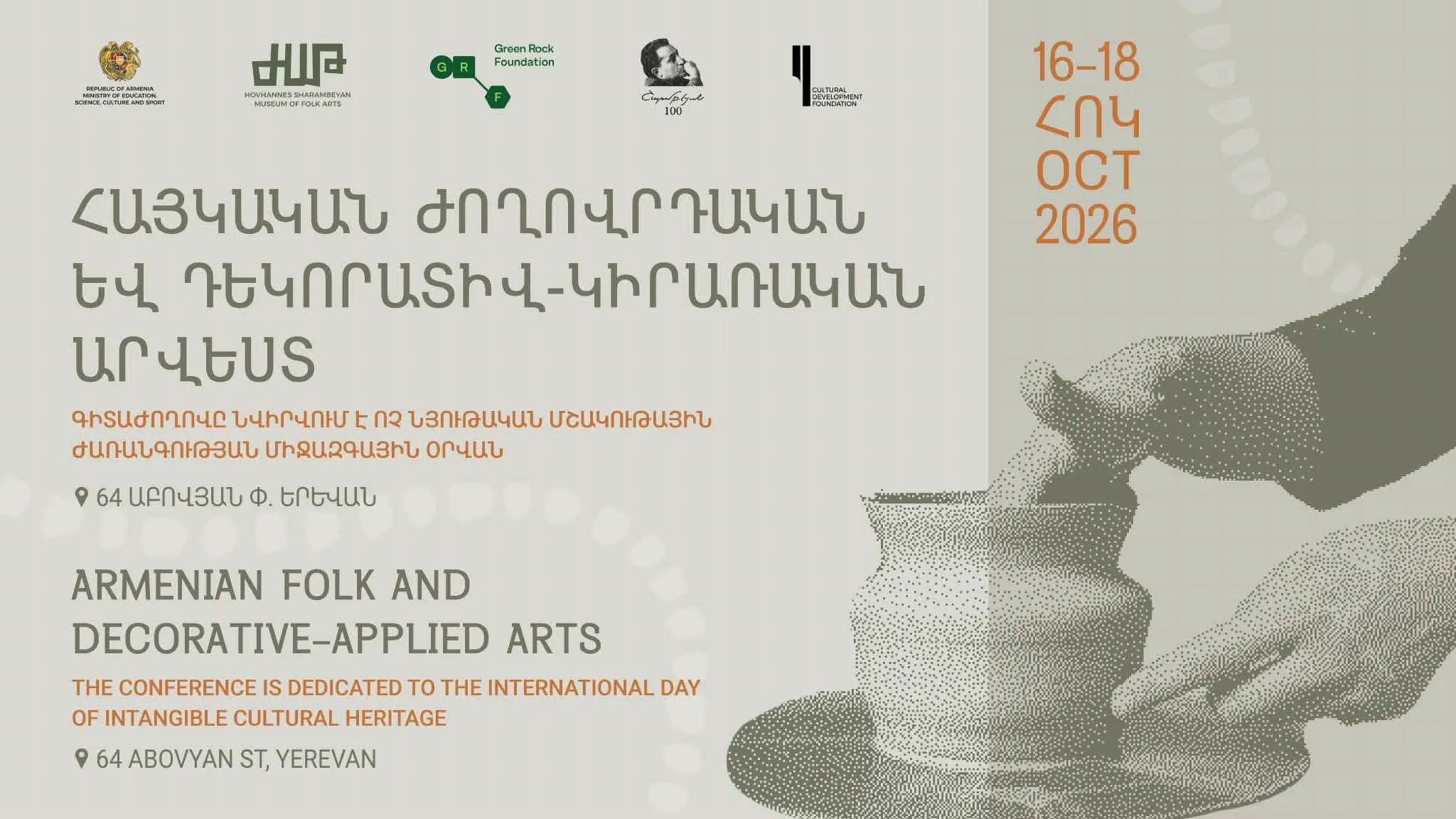
With the financial support of the Ministry of Education, Science, Culture and Sports of the Republic of Armenia, the Hovhannes Sharambeyan Museum of Folk Arts is implementing the “FOLKWHEEL Laboratories” programme, which uses cultural education to contribute to the safeguarding, transmission and vitality of intangible cultural heritage in communities across Armenia.
“FOLKWHEEL Laboratories” operate in Yerevan and in the communities of Gandzakar, Achajur and Verin Tsaghkavan in Tavush Province; Garni and Argel in Kotayk Province; Yernjatap and Ashtarak in Aragatsotn Province; Chambarak in Gegharkunik Province; Goris in Syunik Province; and Alaverdi in Lori Province.
As part of the programme, courses in traditional Armenian handicrafts, including rug and carpet weaving, felting, embroidery, lace-making and doll-making, are organized in participating communities. Children of different ages are introduced to traditional knowledge and practical skills, creating opportunities for this living heritage to be passed on to the next generation.
The programme is a cultural and educational initiative that will gradually expand across Yerevan and the regions of Armenia, engaging people from diverse age groups and social backgrounds. It brings together traditional craft education, the study of local traditions, community gatherings, masterclasses and cultural learning visits, creating a comprehensive educational environment for the safeguarding and transmission of intangible cultural heritage.
A key feature of the programme is that it goes beyond teaching traditional crafts. It also contributes to strengthening cultural identity within communities, increasing appreciation of local heritage and encouraging greater community engagement.
“FOLKWHEEL Laboratories” help shape a new generation that knows and values its cultural heritage, while identifying and developing the craft potential of local communities, supporting the emergence of new practitioners and laying the groundwork for new cultural, creative and tourism initiatives.